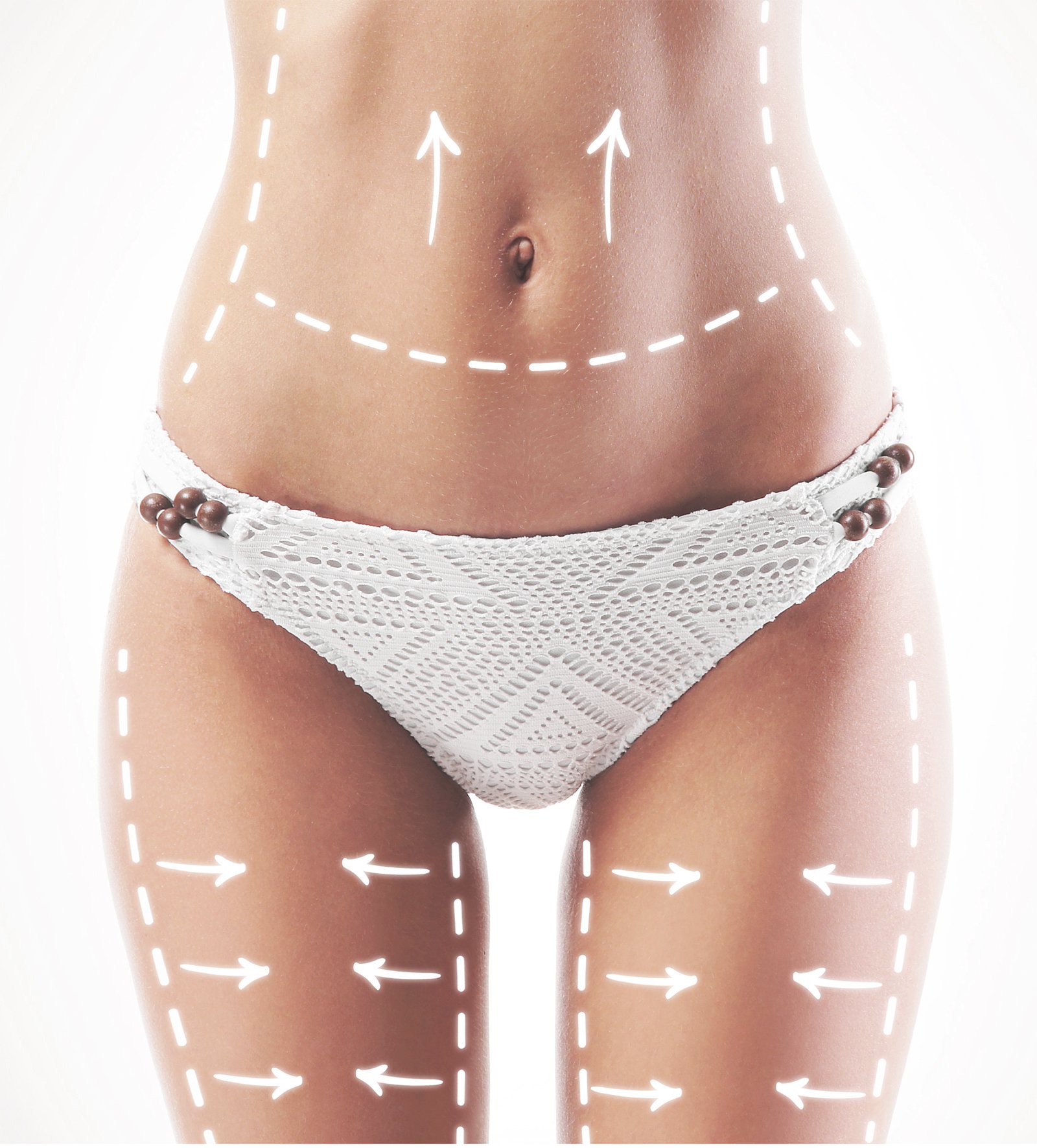
Fat Removal and Body Contouring (Liposuction and Liposhaping)
Liposuction is a surgical procedure performed to enhance body aesthetics by removing stubborn fat deposits—those resistant to diet and exercise—using a vacuum-assisted suction technique.
Liposuction is carried out in a fully equipped hospital under general anesthesia and typically lasts between 1–3 hours. Patients are usually required to stay in the hospital for at least one night after the procedure; in some cases, this may extend to two nights depending on the patient’s condition.
Liposuction generally does not leave noticeable scarring. Small entry points where the cannulas are inserted may leave tiny marks, but these fade over time. Since the incisions are made at the underwear line, they are rarely visible and pose no aesthetic concern. For this reason, liposuction is widely considered a scar-free aesthetic procedure.
Fat cells removed during liposuction do not regenerate. However, it is crucial that patients maintain proper nutrition and regular physical activity following surgery. If the patient continues an unhealthy lifestyle, fat accumulation may recur in the same or other areas. Surgery can remove resistant fat pockets, but maintaining a fit physique requires attention and discipline in the postoperative period.
By the second postoperative day, patients generally begin to feel more comfortable at home. Swelling in the treated areas is expected and may temporarily make the body appear bulkier. Compression garments and surgical tapes must be worn as instructed. Bruising and swelling diminish over the following weeks, and the final results become visible within a few months.
Irregularities such as dimples or uneven contours after liposuction are typically due to technical errors. These imperfections can be corrected with revision surgery, although achieving a completely flawless abdominal contour may not always be possible due to tissue deformities created by the initial procedure.
There is a limit to how much fat can safely be removed during liposuction. This limit varies from patient to patient, but on average, no more than about 10% of total body fat should be removed. Exceeding this limit can cause harm rather than benefit, potentially leading to metabolic and physiological imbalances. Therefore, adhering to the ideal fat removal range is essential.
Recovery after liposuction is generally smooth. A special compression garment is applied at the end of surgery and must be worn for approximately four weeks. After the third week, it may be removed during sleep. Bruising in the treated areas is common but typically resolves significantly within one week. When performed on well-selected patients using appropriate technique, liposuction provides long-lasting results.
Liposuction is one of the procedures most surrounded by misconceptions. Claims of a high risk of death during surgery are purely fictional and unfounded. Liposuction is a surgery with relatively low risk and no inherent life-threatening complications. The key factor is that the procedure must be performed by a knowledgeable and experienced specialist who evaluates the patient thoroughly. In reality, this principle applies to all surgeries and medical treatments. The most critical point is choosing the right doctor.